
Key Takeaways
- Gas geysers burn LPG or PNG and release carbon monoxide (CO), an invisible, odourless gas that is genuinely deadly in a closed bathroom.
- Winter is the danger season: people shut windows and exhaust fans against the cold, trapping the very fumes that need to escape.
- The safest rule is simple: never install a gas geyser inside the bathroom. It belongs in a ventilated balcony, utility area or open space.
- Early CO symptoms, headache, dizziness, nausea, feel like tiredness, so people often don’t realise the danger until it’s severe.
- Good ventilation, a CO alarm, annual servicing and a well-adjusted blue flame are the four layers that keep a gas geyser safe.
Every winter, the news carries the same heartbreaking story: a family found unconscious in a closed bathroom, a gas geyser running quietly on the wall. In my years servicing geysers, the gas ones worry me most, not because they’re bad appliances, but because the danger is invisible and people close their bathrooms tight against the cold. This guide explains exactly how a gas geyser can produce carbon monoxide, why winter makes it worse, and the practical steps that keep your family safe. By the end you’ll know where a gas geyser should never be installed and the warning signs that mean you must act now. It sits alongside our complete water heater safety guide as the one seasonal risk I most want people to understand.
How a Gas Geyser Can Turn Deadly
A gas geyser heats water by burning fuel, usually LPG from a cylinder or piped PNG. When that fuel burns with enough oxygen, it produces mostly harmless carbon dioxide and water vapour. That’s the safe, normal state.
The problem starts when the flame doesn’t get enough fresh air. In a small, sealed bathroom, the burner quickly uses up the available oxygen. Starved of air, the fuel burns incompletely and starts producing carbon monoxide instead of carbon dioxide.
Carbon monoxide is the real killer here. It’s colourless, odourless and tasteless, so your senses give you no warning at all. It binds to your blood far more readily than oxygen does, so even a small amount slowly starves your body of the oxygen it needs, often before you realise anything is wrong.
Warning: You cannot smell carbon monoxide. The “gas smell” people rely on is added to LPG/PNG to warn of an unburnt fuel leak, it is not present in CO from a running flame. Never assume a bathroom is safe just because it doesn’t smell of gas. A quiet, odourless geyser in a closed room is the exact scenario that kills.
Why Winter Is the Dangerous Season
Gas geyser accidents cluster in the cold months, and the reason is painfully simple: everything people do to stay warm makes the geyser more dangerous.
- Windows stay shut: the cold air is kept out, but so is the fresh air the flame needs.
- Exhaust fans stay off: people don’t want to pull warm air out, so the fumes have nowhere to go.
- Longer, hotter baths: the geyser runs longer, burning more fuel and using more oxygen.
- Doors sealed tight: gaps get blocked to keep the warmth in, trapping CO in the room.
In summer, an open window or a running fan quietly saves lives without anyone noticing. In winter, those same safeguards get switched off exactly when the geyser is working hardest. That’s the trap.

The Golden Rule: Never Inside the Bathroom
If you remember nothing else from this article, remember this: a gas geyser should not be installed inside the bathroom. This is the single most important decision for gas geyser safety, and it’s the one most commonly ignored in Indian homes.
The right place for a gas geyser is a well-ventilated spot outside the bathroom, an open balcony, a utility area, or an outer wall with the water piped in. That way the flame always has fresh air, and any combustion products disperse harmlessly outdoors instead of building up around you.
I’ve had customers push back, “but it’s more convenient inside”. My honest answer never changes: convenience is not worth a life. If a bathroom install is truly unavoidable, it demands permanent, generous ventilation and a flue that vents fumes directly outside, fitted by a qualified professional. Even then, I’d rather move it.
Where a gas geyser should and shouldn’t go
| Location | Safe for a gas geyser? | Why |
|---|---|---|
| Open balcony / utility area | Yes, ideal | Constant fresh air, fumes disperse outdoors |
| Kitchen with good cross-ventilation | Sometimes, with care | Only if genuinely airy and never sealed shut |
| Bathroom with a proper external flue | Last resort only | Needs a pro-fitted flue and permanent vents |
| Small closed bathroom, no vent | Never | CO builds up fast with nowhere to escape |
Recognising Carbon Monoxide Poisoning
Because CO gives no warning to your senses, you have to recognise it by how it makes you feel. The cruel part is that early symptoms mimic ordinary tiredness, so people brush them off and stay in the room.
- Headache that comes on during or just after a bath.
- Dizziness or light-headedness, feeling faint when you stand.
- Nausea and a general sick, unwell feeling.
- Unusual drowsiness or confusion, struggling to think clearly.
- Breathlessness without any obvious exertion.
A telling clue: if these symptoms ease when you leave the bathroom and return when you go back in, treat that as carbon monoxide until proven otherwise. If anyone becomes drowsy, faints or won’t wake up, get them into fresh air at once and seek emergency medical help.
Tip: Fit a battery CO alarm on the wall near any indoor gas appliance. It’s an inexpensive device that sounds long before levels turn dangerous, exactly the early warning your nose can’t give you. Test it monthly, the same day you test your ELCB, so both life-saving checks happen together.
Four Layers That Keep a Gas Geyser Safe
Safety with any geyser works in layers, and a fault only turns dangerous when a layer is missing. I saw exactly that pattern with an electric unit in a faulty geyser near-miss I attended, and the same logic applies to gas. Build all four layers and the risk drops dramatically.
- Ventilation first. Keep a window open and the exhaust fan running whenever the geyser is on, in winter especially. Fresh air is your primary defence.
- Right location. Install it outside the bathroom in an airy spot. This removes the danger at the source.
- A CO alarm. A cheap detector gives you the warning your senses can’t. Non-negotiable for any indoor gas appliance.
- Annual servicing. A technician checks the burner, flame quality and gas line, catching problems before they produce excess CO.
For the full range of protective hardware worth fitting, from CO alarms to the right shut-off devices, see our round-up of must-have geyser safety devices. A gas geyser rewards a slightly bigger safety kit than an electric one.
Check the Flame: Your Best Free Indicator
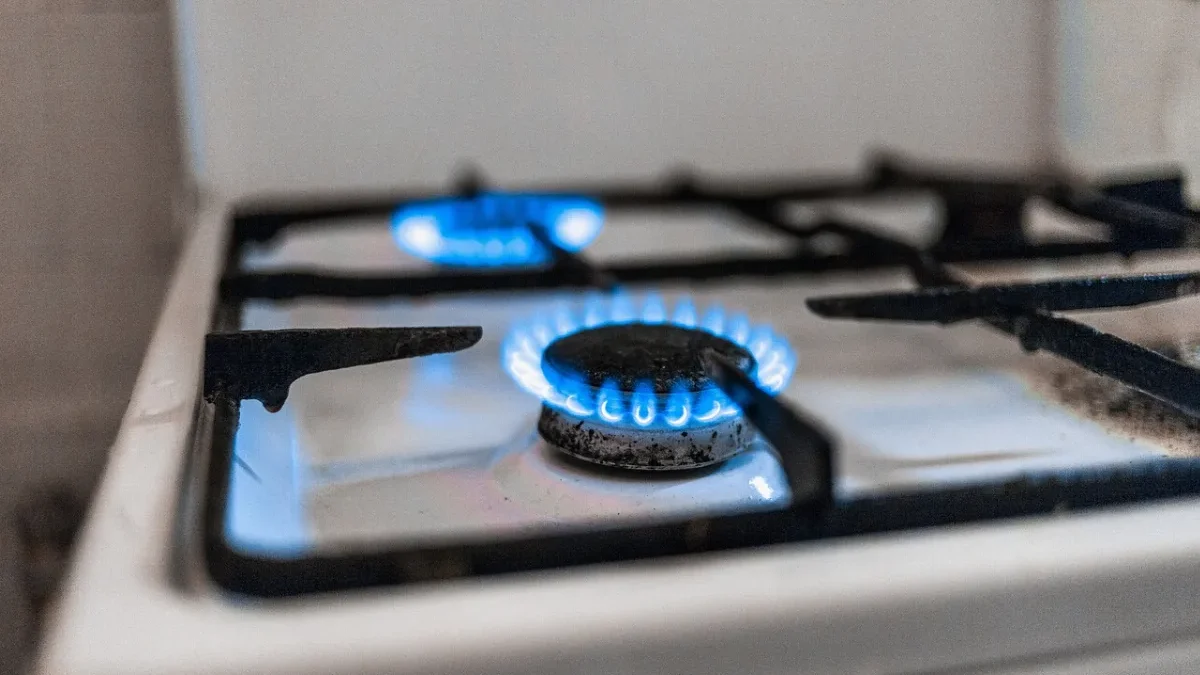
Here’s a diagnostic anyone can do without tools. Look at the burner flame while the geyser runs. A healthy flame burns a crisp, steady blue. That blue colour means the fuel is burning cleanly with plenty of oxygen, producing little CO.
A yellow, orange or flickering lazy flame is a red flag. That colour means incomplete combustion, and incomplete combustion is exactly what produces carbon monoxide. In the homes I’ve serviced, a yellow flame almost always traces back to a blocked burner, a dirty gas jet, or too little air.
If you see a yellow flame, stop using the geyser and call a technician to service it. Don’t keep bathing “just for now”. That flame is telling you the appliance is producing more of the gas you can’t smell.
Warning: Never run a gas geyser to heat a room, and never leave it burning unattended. A flame that seems small and harmless is still consuming oxygen and can still produce CO in a closed space. Light it to heat water, use the water, and switch it off. Treat it as an appliance, not a heater.

Gas Versus Electric: An Honest Note
People sometimes ask if they should just avoid gas geysers entirely. That’s not quite fair. A gas geyser installed correctly, outside the bathroom, well ventilated, serviced yearly, is a perfectly safe and economical way to heat water, especially where electricity is costly or supply is patchy.
The danger isn’t the technology; it’s the combination of a gas flame and a sealed room. An electric geyser carries different risks, mainly electrical shock, which is why its own safety layers, earthing and a tested ELCB, matter so much. Each type is safe when its specific hazard is respected.
My practical view after years on the job: if you already have a gas geyser, don’t panic, relocate it out of the bathroom, ventilate well, and fit a CO alarm. If you’re choosing fresh and the bathroom is your only option, an electric unit is usually the easier one to make safe.
Frequently Asked Questions
Can a gas geyser cause carbon monoxide poisoning?
Yes. When a gas geyser runs in a closed bathroom, the flame runs short of oxygen and burns incompletely, producing carbon monoxide. CO is odourless and colourless, so you get no warning. In a sealed room it can build to fatal levels, which is why winter, with windows shut, is so dangerous.
Is it safe to install a gas geyser inside the bathroom?
No, not in a normal closed bathroom. A gas geyser should be installed outside, in a ventilated balcony or utility area, with water piped in. If a bathroom fit is truly unavoidable, it needs permanent vents and an external flue fitted by a professional, but relocating it is always the safer choice.
What are the symptoms of carbon monoxide poisoning from a geyser?
Headache, dizziness, nausea, drowsiness, confusion and breathlessness, often mistaken for ordinary tiredness. A key clue is that symptoms ease when you leave the bathroom and return when you go back in. If anyone faints or becomes very drowsy, get them into fresh air and seek emergency medical help immediately.
Why does my gas geyser flame look yellow instead of blue?
A yellow or orange flame means incomplete combustion, usually from a dirty burner, blocked gas jet or too little air, and it produces more carbon monoxide. A healthy flame is crisp blue. Stop using the geyser and call a technician to service it; don’t keep bathing while the flame is yellow.
Do I need a carbon monoxide alarm for my gas geyser?
Yes, especially if the geyser is anywhere indoors. A CO alarm is inexpensive and sounds long before levels turn dangerous, giving you the warning your senses cannot. Fit it on the wall near the appliance and test it monthly. For any indoor gas geyser, it should be considered essential, not optional.
Stay Warm Without the Risk
A gas geyser is not something to fear, but it is something to respect. The winter danger is entirely preventable: keep it out of the bathroom, keep the air moving, watch for a blue flame, and fit a CO alarm. Do those four things and you get all the comfort of hot water with none of the invisible risk.
Before this winter sets in, walk over to your gas geyser and check its location and ventilation with fresh eyes. For the wider set of protections every home should have, browse our geyser safety guides, and for background on the gas itself, the Wikipedia overview of carbon monoxide poisoning is a clear, sobering read.