Key Takeaways
- A safe geyser is not one device but a small team of them: earthing, an RCCB, an MCB, a pressure relief valve, a thermostat, a thermal cut-out, and a multi-function valve.
- The non-negotiables in a wet Indian bathroom are proper earthing plus a 30 mA RCCB. Everything else builds on that base.
- Most of these come built into a decent ISI-marked geyser; the wiring-side devices sit in your DB box and are the ones people skip.
- Buying a device is only half the job. Each one must be correctly rated, correctly installed, and tested on a schedule.
- Never treat any of these as optional to save a few hundred rupees. They are the difference between an appliance and a hazard.
When someone asks me “which geyser is safest?”, my honest answer surprises them: safety is far less about the brand on the box and far more about the seven devices working together around it. I have serviced expensive geysers that were death-traps because the earth was disconnected, and humble ones that were perfectly safe because every protective device was in place and tested. In a bathroom, you are mixing water, a heavy electrical load, and bare skin, so the margin for error is thin. By the end of this round-up you will know the seven safety devices every geyser setup should have, which are built in, which live in your DB box, and how to tell if yours are actually doing their job. It builds on our complete water heater safety guide.
How to Read This List
These devices split into two groups, and understanding that split tells you where to focus. Some are inside the geyser, fitted at the factory on any ISI-marked unit. Others sit in your home’s wiring, and those are the ones installers quietly leave out to save time or money.
I have ordered them roughly by how often I see them missing or failed on real service calls, not by price. The cheapest items on this list are frequently the ones that save lives.
1. Proper Earthing (The Foundation)
Earthing is not a gadget you buy off a shelf, but it is the single most important safety feature on this list, so it goes first. It gives leaking current a safe path to ground instead of through the person touching the tap.
Without a live, continuous earth, an RCCB has a much harder time doing its job, and the geyser body can become live without anything cutting the supply. This is why I always start a safety check at the earth. If you want to verify or improve yours, our step-by-step guide to earthing a geyser properly covers exactly what a good electrician should confirm.
2. RCCB / ELCB (Earth-Leakage Protection)
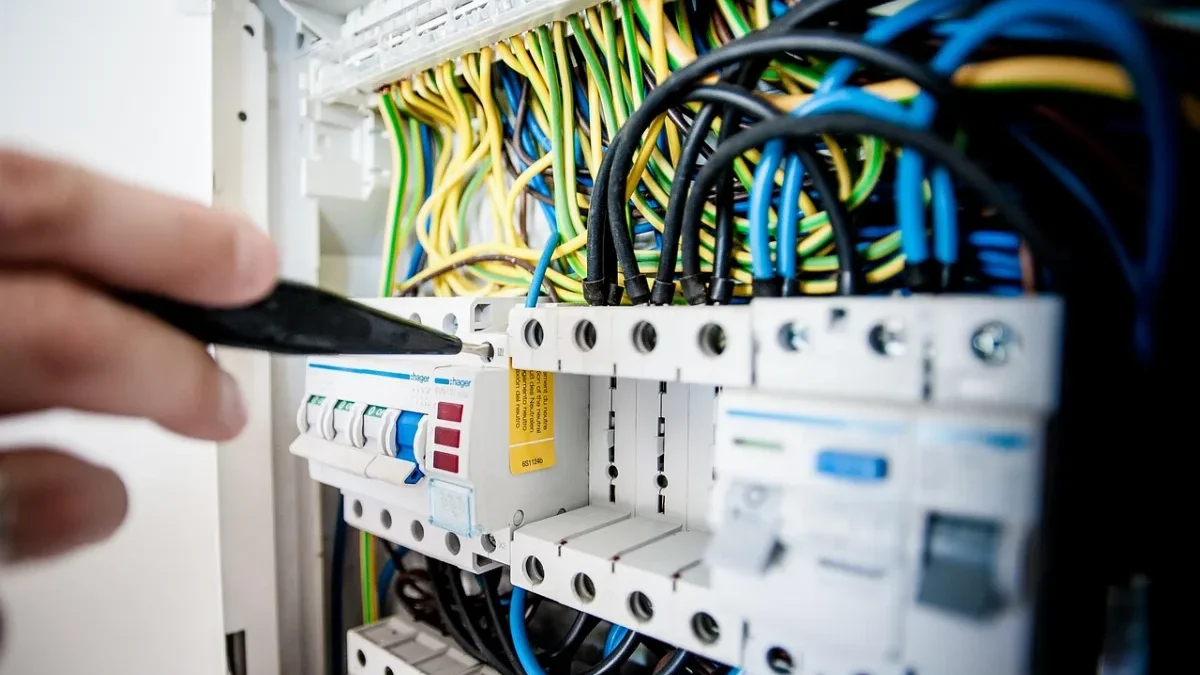
This is the device that watches for current leaking to earth and cuts the supply within milliseconds, fast enough to protect a human. For a bathroom geyser I want to see a 30 mA RCCB, because that rating is set to protect a person, not just the cable.
It lives in your distribution board, not inside the geyser, which is why so many homes lack one. Fitting it is a job for a licensed electrician. Crucially, an RCCB you never test is a false comfort; press its test button monthly, following our guide to testing your geyser’s ELCB or RCCB.
3. MCB on a Dedicated Circuit
An MCB (Miniature Circuit Breaker) protects the wiring itself against overload and short circuits. A storage geyser draws a heavy load, so it needs its own dedicated, correctly rated MCB, not a share of a circuit feeding lights and sockets.
People often confuse the MCB and the RCCB because they sit side by side in the board. They do different jobs and you need both. If the difference is fuzzy for you, our explainer on ELCB vs MCB for geysers lays it out plainly.
Warning: Running a geyser off a shared power point or an ordinary two-pin plug is one of the most dangerous shortcuts I see. The load can overheat under-rated wiring, and you lose the dedicated protection a geyser demands. Insist on a dedicated, earthed, protected point.
4. Pressure Relief / Safety Valve
Water expands as it heats. If the thermostat and cut-out both failed and the tank kept heating, pressure would build dangerously. The pressure relief valve (often part of a multi-function valve on the inlet) releases that excess before it can rupture the tank.
This one comes in the geyser box and must be fitted, never left in the packet. I have seen installers skip it to save five minutes. Where possible I run a small drain line from it so any release goes safely to a drain rather than onto the wiring below. A valve that weeps constantly or is blocked with scale needs attention, not tape over it.
5. Thermostat (Temperature Control)
The thermostat is the everyday brain of the geyser. It switches the heating element off once the water reaches the set temperature and back on when it cools, keeping the water hot without letting it overheat.
Beyond comfort, it is a safety device: a working thermostat prevents the water from creeping to scalding or dangerous temperatures. If your geyser heats endlessly, trips on temperature, or delivers scalding water, suspect the thermostat. That is one of the classic warning signs of an unsafe water heater worth acting on quickly.
6. Thermal Cut-Out (The Backup Brain)
The thermal cut-out is the quiet hero most owners have never heard of. It is a second, independent safety that kills power to the element if the temperature climbs too high, typically because the thermostat has failed.
Think of it as the last line of defence against a runaway heating element. On a good ISI-marked geyser it is built in. If your geyser has tripped its cut-out, resetting it without finding out why is a mistake; something upstream, usually the thermostat, has failed and needs replacing. This is genuine safety redundancy, and it is a strong reason to buy a properly certified unit.
7. Multi-Function Valve / Non-Return Valve
Many modern geysers use a multi-function valve on the inlet that bundles a few jobs: pressure relief, a non-return function so hot water does not push back into the cold line, and a way to release expansion. It protects both the tank and your plumbing.
The non-return element matters because it stops hot, mineral-heavy water from flowing backward and it keeps the pressure behaving as designed. Like the safety valve, it must be fitted as the maker specifies and kept clear of scale, especially in hard-water areas.
The Seven at a Glance
| Device | Protects against | Where it sits | Who fits/checks it |
|---|---|---|---|
| Earthing | Live geyser body / shock | Building earth to geyser | Licensed electrician |
| RCCB (30 mA) | Earth-leakage shock | DB box | Electrician; you test monthly |
| MCB | Overload / short circuit | DB box | Electrician |
| Pressure relief valve | Over-pressure / tank burst | Geyser inlet | Installer / plumber |
| Thermostat | Overheating water | Inside geyser | Factory / technician |
| Thermal cut-out | Runaway element | Inside geyser | Factory / technician |
| Multi-function valve | Backflow / pressure | Geyser inlet | Installer / plumber |
Tip: When buying a geyser, look for the ISI mark and confirm the box includes the safety valve and any multi-function valve. The internal devices, thermostat, cut-out, and valves, come with a properly certified unit. The wiring-side devices are on you and your electrician to add.
Buying and Fitting: What Actually Matters
It is tempting to treat this as a shopping list, but the device is only as good as its rating and its installation. A few principles keep you honest.
- Match the rating to the job. A 30 mA RCCB for personal protection, an MCB sized to the geyser’s load, a valve rated for your unit’s pressure.
- Certification over price. An ISI-marked geyser and reputable protective devices are worth the small premium; the cheapest unbranded valve is not where to economise.
- Installation makes or breaks it. A perfect RCCB wired without a real earth is far weaker than it should be. Get the wiring-side devices fitted by a licensed electrician.
- Test what can be tested. Press-test the RCCB monthly, and have the whole set-up inspected roughly once a year.
My honest take after years of service calls: spending a little more on certified devices and a proper installation is the best-value money you will spend on a geyser. The failures I am called to almost always trace back to a saved few hundred rupees on one of these seven.
Frequently Asked Questions
What safety devices does a geyser need?
A geyser needs proper earthing, a 30 mA RCCB, a dedicated MCB, a pressure relief valve, a working thermostat, a thermal cut-out, and usually a multi-function inlet valve. The internal devices come with an ISI-marked unit; the earthing, RCCB, and MCB sit in your wiring and must be added by an electrician.
Is an ELCB or RCCB compulsory for a geyser?
Practically speaking, yes. A 30 mA RCCB is the device that protects a person from an earth-leakage shock in a wet bathroom, and no responsible installer should skip it. Combined with proper earthing, it is the core of geyser safety. Treat it as essential, not optional, and test it monthly.
What is the difference between a thermostat and a thermal cut-out?
The thermostat is the everyday control that switches the element off at the set temperature and on again as water cools. The thermal cut-out is an independent backup that kills power if the temperature climbs dangerously high, usually because the thermostat has failed. Together they prevent a runaway, overheating element.
Do these safety devices come built into the geyser?
The thermostat, thermal cut-out, and safety and multi-function valves come with a good ISI-marked geyser. The earthing, RCCB, and dedicated MCB are part of your home’s wiring and must be fitted separately by a licensed electrician. Many unsafe setups have the internal devices but lack the wiring-side ones.
How often should geyser safety devices be checked?
Press-test the RCCB once a month yourself. Have a licensed electrician inspect the earthing, MCB, and RCCB, and a technician check the thermostat, cut-out, and valves, roughly once a year. Also act immediately on warning signs like scalding water, constant tripping, or a leaking safety valve.
Final Word
A safe geyser is a system, not a single clever gadget. Get the earthing and RCCB right first, insist on a dedicated MCB, and make sure the valves, thermostat, and cut-out that come with a certified unit are all present and working. Buy well, fit it properly, and test on a schedule.
To keep going, read our full water heater safety guide or browse every article in our safety section. For a plain-English background on the wiring-side protection, the Wikipedia article on residual-current devices is a useful, non-commercial reference.