Key Takeaways
- Indian homes use four main types: instant (tankless), electric storage, gas, and solar. Each suits a different room, budget and habit.
- Instant geysers heat water on demand and suit sinks and quick showers; storage geysers keep a warm reserve and suit bucket baths.
- Gas geysers heat fast and run cheap but need real ventilation, a closed-bathroom gas geyser risks carbon-monoxide poisoning.
- Solar heaters cost the most upfront and the least to run, but only make sense with a sunny, accessible roof.
- There is no single best type. The right one depends on how your household actually uses hot water.
Ask five shopkeepers which water heater is best and you’ll get five confident, contradictory answers, usually pointing at whatever’s in stock. After a decade of installing every kind of geyser across all sorts of Indian homes, I can tell you the honest truth: there is no single best type, only the right type for your room, your budget and the way your family bathes. Once you understand what each one is actually built to do, the choice becomes obvious. By the end of this primer you’ll know the four main types, how each works, and which situations each one suits. If you’re weighing up a full purchase, this pairs well with our broader complete guide to buying a water heater.
The Four Types You’ll Actually See in India
Strip away the marketing names and Indian homes really use four kinds of water heater: instant electric, storage electric, gas, and solar. A handful of newer options exist, but these four cover almost every home I visit.
The clearest way to tell them apart is by one question: do they store hot water, or heat it on demand? Storage geysers and solar systems keep a tank of warm water ready. Instant geysers heat as the water flows. Gas geysers can do either, but most domestic ones heat on demand too.
Let’s take them one at a time, because the differences matter more in daily use than the specs on the box suggest.
Instant (Tankless) Geysers
An instant geyser is a small unit, usually one to six litres, that heats water only while it flows through. There’s no big tank sitting warm all day. Switch it on, wait a minute or two, and hot water arrives at the tap.
Inside, a powerful heating element warms the thin stream of water passing over it. Because it heats on demand, it wastes very little standby heat, and it’s compact enough to tuck above a kitchen sink or in a tight bathroom.
Where instant geysers shine
They’re ideal where you need hot water in a thin, steady stream rather than a big lump all at once. A kitchen sink for washing up, a hand basin, or a quick shower with a mixer tap are all perfect fits.
Where they frustrate people
The classic complaint is that they can’t fill a bucket of hot water quickly. Because they heat on the fly, the flow of genuinely hot water is limited. If your household takes bucket baths, an instant geyser will test your patience every morning.
Electric Storage Geysers
This is the wall-mounted tank in most Indian bathrooms, typically holding ten to twenty-five litres. It heats a reserve of water and keeps it warm, so you have a full bucket or a long shower waiting whenever you want it.
An element inside the insulated tank heats the water; a thermostat cuts the power once it reaches the set temperature and switches it back on as it cools. Good units wrap the tank in thick PUF insulation so the water stays warm for hours with the power off.
The storage geyser is the versatile workhorse, and the type I fit most often. It handles buckets and showers equally well, which is why it’s the default for a family bathroom. The trade-offs are some standby heat loss and a tank that needs maintenance in hard water, since scale and corrosion slowly build inside.
Tip: If your water is hard, the tank lining matters more than the brand. A glass-lined tank with a healthy anode rod resists corrosion far better than a bare one. It’s the single biggest factor in how long a storage geyser survives in most Indian cities.
Gas Geysers (LPG and PNG)
A gas geyser burns LPG from a cylinder or piped natural gas (PNG) to heat water, usually on demand like an instant unit. Where gas is cheaper than electricity, they can be the cheapest to run, and they heat water fast, which large families appreciate.
The heating is quick and the running cost often low, but gas geysers carry a safety burden the electric ones don’t: combustion. Burning gas produces exhaust gases, including carbon monoxide, which is odourless and deadly.
Warning: Never run a gas geyser in a closed, unventilated bathroom. It must be installed where exhaust fumes can escape, ideally outside the bathroom or with a proper flue and cross-ventilation. Every year, sealed bathrooms cause avoidable carbon-monoxide tragedies. If in doubt, have a licensed technician assess the ventilation before use.
Solar Water Heaters
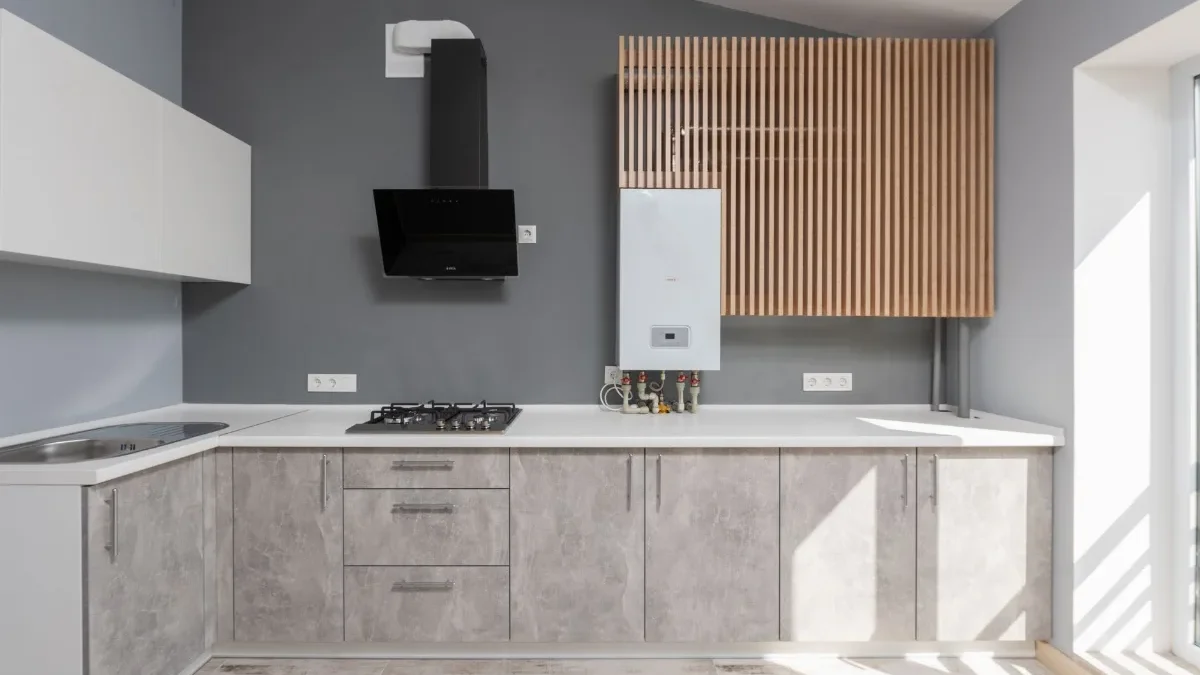
A solar water heater uses roof-mounted collector panels to heat water with sunlight, storing it in an insulated tank. It costs the most to buy and install, but once it’s up, the sun does the heating for free.
On a sunny day, a well-sized solar system can meet most of a household’s hot-water needs with almost no running cost. That makes it genuinely economical over the long run, and kinder on your electricity bill.
The catches are practical. You need an independent house or a flat with real roof access, unshaded space for the panels, and reliable sunlight. On cloudy days and through winter mornings, output drops, which is why most systems keep an electric backup element. For a top-floor tenant with no roof rights, solar usually isn’t an option.
Quick Comparison of the Four Types
Here’s the whole picture on one screen. Use it to narrow down before you read into any single type in detail.
| Type | How it heats | Best suited to | Main drawback |
|---|---|---|---|
| Instant electric | On demand, small unit | Kitchen sink, quick shower | Can’t fill buckets fast |
| Storage electric | Warms a tank reserve | Family bathrooms, bucket baths | Standby loss, tank scaling |
| Gas (LPG/PNG) | Burns gas, usually on demand | Large families, fast heating | Ventilation and CO risk |
| Solar | Sunlight heats a tank | Independent homes, sunny roofs | High upfront cost, weather-dependent |
Notice there’s no “best” column, because it depends entirely on your situation. A single family often uses two or three of these in different rooms.

How to Pick the Right Type for Your Home
Now put it to work. Rather than asking which type is best in the abstract, ask which fits the specific room and habit you’re buying for. A few honest questions get you there fast.
- Do you take bucket baths? Then lean towards a storage geyser, which gives you a lump of hot water at once.
- Is it just for a kitchen sink or a quick rinse? An instant geyser is cheaper, smaller and wastes less.
- Big family, gas connection, good ventilation? A gas geyser can heat fast and run cheap, if it’s safely installed.
- Own a sunny, accessible roof and plan to stay put? Solar pays for itself over years of near-free hot water.
Once you’ve settled on a type, the next decision is size. Getting the litres right matters as much as the type, and our guide on choosing the right geyser capacity walks you through it. When you’re ready to compare specific models side by side, keep the geyser buying checklist handy so you don’t miss anything at the shop.
Frequently Asked Questions
What is the difference between an instant and a storage geyser?
An instant geyser heats water on demand as it flows, using a small unit with little or no tank. A storage geyser warms a reserve of ten to twenty-five litres and keeps it hot. Instant suits quick showers and sinks; storage suits bucket baths.
Which type of water heater is cheapest to run?
Solar is cheapest over time because sunlight is free, though it costs the most to install. Where gas is cheaper than electricity, gas geysers run economically too. Among electric options, a high-star storage geyser used sensibly costs less to run than a poorly insulated one.
Are gas geysers safe to use in a bathroom?
Only with proper ventilation. Gas geysers produce carbon monoxide, which is odourless and lethal in a closed room. They should be installed outside the bathroom or with an adequate flue and cross-ventilation. Never seal a bathroom with a running gas geyser to keep it warm.
Is a solar water heater worth it in India?
If you own a sunny, unshaded roof and plan to stay for years, yes. The high upfront cost is offset by near-free hot water afterwards. It’s less practical for tenants, shaded roofs, or homes with little sunlight, where an efficient electric geyser makes more sense.
Can I use one water heater for my whole house?
You can, but many homes are better served by more than one. A single large storage geyser can feed a bathroom, while a small instant unit handles the kitchen. Splitting the load by room usually gives better performance and lower running cost than one central heater.
Match the Type to Your Home
The four types aren’t rivals so much as tools for different jobs: instant for sinks and quick showers, storage for buckets and baths, gas for fast heating with good ventilation, and solar for sunny homes playing the long game. Once you frame the choice around your own rooms and habits, the right type almost picks itself. When you’re ready to go further, explore the rest of our water heater buying guides, and for a plain-English look at the underlying technology, the Wikipedia overview of water heating is a good starting point.