
Key Takeaways
- Wall-mounted is the default for almost every Indian bathroom, it saves floor space, keeps the tank clear of splashing, and puts the outlet high for good pressure.
- Floor-standing (or a floor stand) makes sense only for large tanks, weak or hollow walls, or big solar and central systems that a wall simply cannot carry.
- Vertical tanks give slightly better hot-water delivery than horizontal ones; horizontal models are about squeezing above a false ceiling, not performance.
- Whatever you choose, the weight of a full tank decides everything, a filled 25L geyser loads the wall or floor with 30 kg-plus.
“Where does it even go?” is usually the first real question once a geyser lands at the door. On paper wall-mounted versus floor-standing sounds like a design choice; in a cramped bathroom it is a practical fight over the last square foot of space. In more than a decade of fittings across flats and independent homes, I have hung the vast majority on the wall, but the handful I have stood on the floor were not mistakes, they were the only sensible option. By the end of this piece you will know exactly which layout suits your bathroom, your tank size, and your wall, and where each one quietly costs or saves you.
This is one piece of the bigger picture in our complete guide to water heater installation, which is worth skimming first if you are planning a fresh fit from scratch.
What each option actually means
Let us clear up the terms, because people mix them up at the shop counter all the time.
- Wall-mounted: the tank hangs off brackets fixed to the bathroom wall, usually high up. This is what “geyser installation” means for most homes.
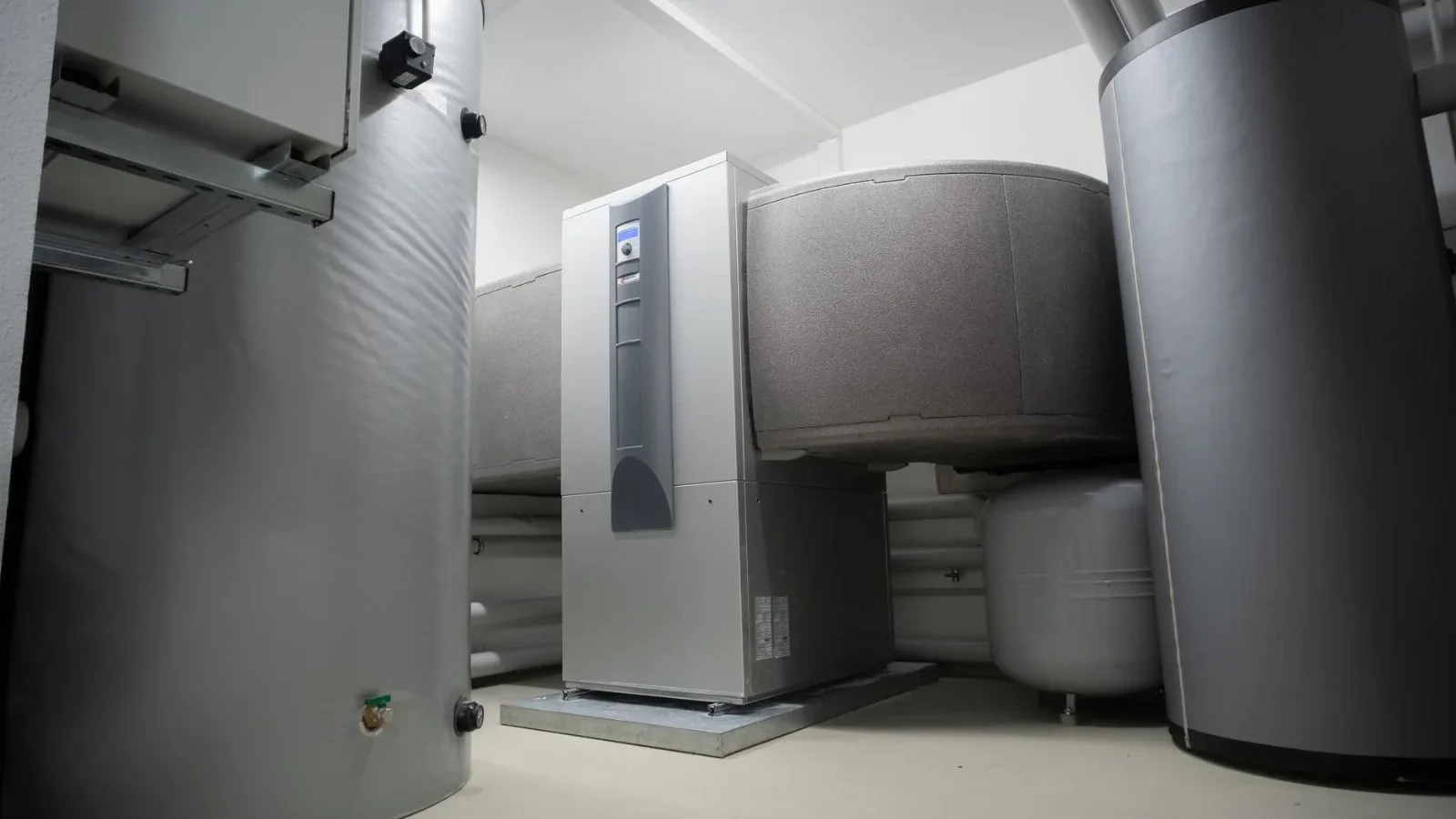
- Floor-standing: the unit sits on the floor or on a low fabricated stand, with weight carried by the ground rather than the wall. Common for large storage tanks and central systems.
- Vertical vs horizontal: a separate axis. Vertical tanks stand tall; horizontal tanks lie flat, usually to hide above a false ceiling. Both are normally wall-mounted.
So the real decision is two questions stacked together: wall or floor for the weight, and vertical or horizontal for the shape. Most bathrooms answer “wall, vertical”, but not all.

Wall-mounted geysers: the default, and why
Nine times out of ten I mount on the wall, and there are good reasons it became the norm in Indian homes.
Bathrooms here are small. Lifting the tank off the floor frees the space you actually use for a bucket, a stool, or a washing machine. A high tank also keeps the electricals and connections well clear of the wet floor, which matters for safety in a room that is splashed daily. And mounting the outlet high gives you a little more gravity behind the hot water on its way to the tap.
The one condition is a sound wall. On solid brick or RCC concrete, a standard bracket with the right anchors will hold a normal domestic tank for years. Get the anchoring right and wall-mounting is cheaper, cleaner, and safer than any alternative. If you want the detail on the hardware, our guide to the best geyser mounting brackets and wall fixings walks through exactly what to use for each wall type.
Tip: Before you commit to wall-mounting, knock on the wall where the tank will sit. A dull, solid thud means brick or concrete and an easy, reliable fixing. A hollow ring means AAC or hollow block, mount there only with proper anchors, or seriously consider a floor stand instead.
Floor-standing geysers: when the wall is the wrong answer
Floor-standing is not old-fashioned, it is the correct call in specific situations, and forcing a wall mount in those cases is how tanks end up on the bathroom floor with a cracked tile beneath them.
- Large tanks: 50L, 100L or bigger units, especially in independent houses, get very heavy when full. A floor or a purpose-built stand carries that far more safely than most walls.
- Weak walls: if the only wall available is a thin partition or crumbly block, transferring the load to the floor removes the risk entirely.
- Solar and central systems: the storage tank for a solar water heater or a whole-home system almost always stands on a platform or the roof slab, not on a bracket.
- Utility and terrace installs: where floor space is not precious, standing the unit makes servicing easier, you can reach every side.
The trade-off is footprint. A floor unit eats space you might not have in a small bathroom, and its connections sit lower, closer to the wet zone, so the plumbing and any electricals must be routed and protected with more care.

Vertical vs horizontal orientation
This is the part buyers overthink. Orientation is mostly about where the tank physically fits, with one small performance note.
A vertical tank naturally lets hot water rise to the outlet at the top while cold sits at the bottom, so it tends to deliver a slightly cleaner run of hot water. A horizontal tank exists to solve a space problem, tucking neatly above a false ceiling or in a slim gap where a tall unit will not go. There is nothing wrong with horizontal; just do not choose it expecting better performance. Choose it because the vertical simply will not fit.
One practical caution: a horizontal tank puts more leverage on its mounting anchors than a vertical one of the same size, because the weight hangs further out from the wall. That makes anchor choice even more important for horizontal installs.
Side-by-side comparison
Here is how the two layouts stack up on the things that actually matter day to day.
| Factor | Wall-mounted | Floor-standing |
|---|---|---|
| Floor space used | None, frees the floor | Takes up floor footprint |
| Best tank size | Up to ~35L comfortably | Large 50L+, solar, central |
| Wall needed | Sound brick or concrete | Any, load goes to floor |
| Safety near wet floor | Better, tank sits high | Connections sit lower |
| Servicing access | Good, but overhead | Excellent, all sides reachable |
| Typical use | Most Indian bathrooms | Big tanks, weak walls, terraces |
Read the table as a rule of thumb, not a law. A 25L tank on a genuinely weak wall belongs on a stand even though the size says “wall”. Let the weakest link, the wall or the weight, make the final call.
Weight is what really decides
Whatever the shop tells you, the deciding number is the weight of a full tank. Water weighs one kilogram per litre, so the real load is the empty unit plus its capacity in litres.
| Tank size | Full water weight | Approx. total load | Usual best home |
|---|---|---|---|
| 15L storage | ~15 kg | ~22-26 kg | Wall-mounted |
| 25L storage | ~25 kg | ~33-38 kg | Wall (sound wall) or stand |
| 50L storage | ~50 kg | ~60-70 kg | Floor / stout stand |
| 100L+ / solar | 100 kg+ | Well over 120 kg | Floor or roof platform |
For anything 15L and up on a wall, I use at least two fixing points into solid masonry, sized well above their share of the load. Once you pass roughly 35L, or the wall is anything less than sound brick or concrete, a floor stand stops being an option and becomes the responsible choice.

A quick example from a recent job
A family in a newer apartment wanted a 50L tank wall-mounted in a small bathroom to keep the floor clear. Fair wish, except the only available wall was AAC block, and 50L full is roughly 60-70 kg hanging off it. I have seen that combination fail. We put the tank on a low welded MS stand in the corner instead, bolted to the floor slab. They lost a little floor space but gained a rock-solid install and easy access for servicing. Same tank, right support: sometimes the floor is simply the honest answer, and pretending otherwise is how accidents happen.
Frequently Asked Questions
Is a wall-mounted or floor-standing geyser better?
For most Indian bathrooms, wall-mounted is better, it frees floor space, keeps the tank clear of the wet floor, and gives good pressure. Floor-standing wins only for large tanks, weak or hollow walls, and solar or central systems the wall cannot safely carry.
Can any wall hold a wall-mounted geyser?
No. Solid brick and RCC concrete hold a normal domestic tank well with the right anchors. Hollow block, AAC block, and thin partitions need special anchors or, better, a floor stand. Always size the fixing for the full tank weight, not the empty unit you lift in the shop.
Is a vertical or horizontal geyser better?
Vertical tanks deliver hot water slightly better because hot water rises to the top outlet. Horizontal tanks exist mainly to fit above a false ceiling or in a slim gap. Choose horizontal for space reasons, not performance, and use stronger anchors as the weight hangs further from the wall.
At what size should I switch to a floor-standing geyser?
As a rule of thumb, tanks up to about 35L sit comfortably on a sound wall. Beyond that, or for solar and central systems, a floor or fabricated stand carries the load far more safely. A weak wall can move that switch point lower regardless of size.
Does a floor-standing geyser need special support?
Usually yes for larger units, a level, sturdy platform or a welded MS stand bolted to the slab keeps a heavy full tank stable and its connections clear of standing water. On a solid floor a small stand raises the base above the wet zone and makes servicing every side much easier.
The bottom line
For most homes the answer is simple: mount a vertical tank on a sound wall, high and level, with anchors sized for the full weight. Reach for the floor only when the tank is large, the wall is weak, or you are dealing with solar and central systems. Let the weakest link decide, not the salesperson. If you are still weighing whether to do the whole job yourself, read our take on professional versus DIY geyser installation, and browse the rest of our installation guides to plan the full fit. For a plain-English primer on the technology itself, this water heating overview is a solid read.