Key Takeaways
- Steaming or scalding water, hissing sounds, or a geyser that keeps tripping its cutout are all signs of overheating, and it is a genuine safety fault, not a quirk to ignore.
- The most common cause by far is a stuck thermostat, followed by a heavy layer of scale on the element and, less often, a wiring or pressure fault.
- Water above 60°C scalds fast: a child or an elderly person can get a serious burn in about five seconds, so the temperature setting really matters.
- If the water is near boiling or you hear hissing, switch off at the MCB, open a hot tap to release pressure, and keep away from the tank.
- A healthy thermostat, yearly descaling, and a working pressure release valve prevent almost every overheating case I am ever called out to.
One winter morning in Nagpur I opened a hot tap for a client and steam came off the water before it even hit the bucket. The geyser had been running all night on a jammed thermostat, and the tank was sitting close to boiling. A geyser that overheats is not just wasteful; it is a scalding and pressure risk, and it sits right at the heart of everyday water heater safety.
Let me walk you through what overheating looks like, why it happens, and the exact steps to take the moment you notice your water is too hot.
What Overheating Actually Means
A storage geyser is meant to heat water to a set point, usually somewhere between 50°C and 65°C, then switch the element off and hold it there. Overheating means that switch-off is not happening, so the element keeps pouring heat into water that is already hot enough.
Left unchecked, the water climbs toward boiling. That builds steam and pressure inside a sealed tank, and it is why a jammed thermostat is not a minor annoyance but something to act on the same day.
The Warning Signs You Should Never Ignore
Overheating rarely arrives without notice. These are the signals I tell every family to watch for.
- Water that steams heavily at the tap or feels scalding even on a low setting.
- A hissing, gurgling, or rumbling noise from the tank, which is steam forming inside.
- The pressure release valve dripping or spitting hot water more than usual.
- The geyser tripping its MCB or thermal cutout again and again.
- A faint burnt or plastic smell near the switch or the geyser body.
Any one of these means the geyser needs attention. Two or more together, especially hissing plus scalding water, means you should switch it off first and investigate after.
Why a Geyser Overheats
In more than ten years of service calls, nearly every overheating geyser has come down to one of three faults. Knowing them helps you describe the problem clearly and avoid being oversold a new unit.
A stuck or failed thermostat
The thermostat is the small sensor that tells the element when to stop. When its contacts weld shut or its dial drifts, it never sends the stop signal, so the element runs on and on. This is the cause in most of the overheating jobs I attend.
Heavy scale on the element
In hard-water areas across much of India, calcium builds a thick crust on the heating element. That crust traps heat against the element and confuses the thermostat reading, so the water gets far hotter than the dial suggests. Regular descaling keeps this in check.
Wiring or pressure faults
Less often, a wiring fault keeps the element energised, or a blocked outlet and a stuck pressure valve let heat and pressure build with nowhere to escape. These are rarer but more serious, and they belong to an electrician or technician, not a DIY fix.
| Cause | Typical sign | What it needs |
|---|---|---|
| Stuck thermostat | Scalding water, repeated cutout trips | Thermostat replacement |
| Scale on element | Water hotter than the dial, slow heating too | Descaling or element change |
| Wiring or pressure fault | Hissing, valve spitting, burnt smell | Electrician or technician |
What to Do Right Now If Your Geyser Is Too Hot
If you have caught scalding water or hissing, do not stand around debating it. Work through these steps in order.
- Switch the geyser off at the MCB on the distribution board, not only at the wall switch.
- Open a hot tap and let it run gently for a minute or two to release built-up heat and pressure. Keep hands and face clear of the steam.
- Do not open, tap, or splash cold water on a very hot tank; a sudden shock can stress the lining.
- Let the tank cool for a couple of hours before anyone touches it or uses that bathroom for a hot bath.
- Note what you saw and heard, then call a technician to check the thermostat, element, and pressure valve before you switch it on again.
Warning: Never try to relieve pressure by loosening a fitting or the pressure valve on a hot, sealed tank. Trapped steam can spray scalding water. Always cut the power first and let it cool, and if the tank is bulging, leaking, or making loud knocking sounds, keep everyone away and call a professional at once.
Setting a Safe Temperature
Most families never need water hotter than 60°C. At that setting you get plenty of hot water for a bath after mixing with cold, the element works less, and scale forms more slowly than at higher settings.
The scald risk is real and quick. Skin exposed to 60°C water burns badly in around five seconds, while at 50°C it takes far longer, which is why homes with young children or older adults benefit from a slightly lower dial. You can see how fast burns happen at different temperatures in the reference on scalding.
Tip: If your geyser dial has no numbers, set it so that a fully heated tank feels hot but you can still hold a hand under the running tap for a second without flinching. Then mark that spot with a dab of nail polish so nobody nudges it higher by mistake.
When to Call a Professional
Some overheating jobs are safe to describe and hand over; none are worth guessing at with a live, hot tank. Call a qualified person when any of these apply.
- The water is scalding even after you turn the dial right down.
- The geyser hisses, knocks, or the pressure valve keeps spitting.
- The cutout or MCB trips every time you switch on.
- You smell burning or see scorch marks near the switch or terminals.
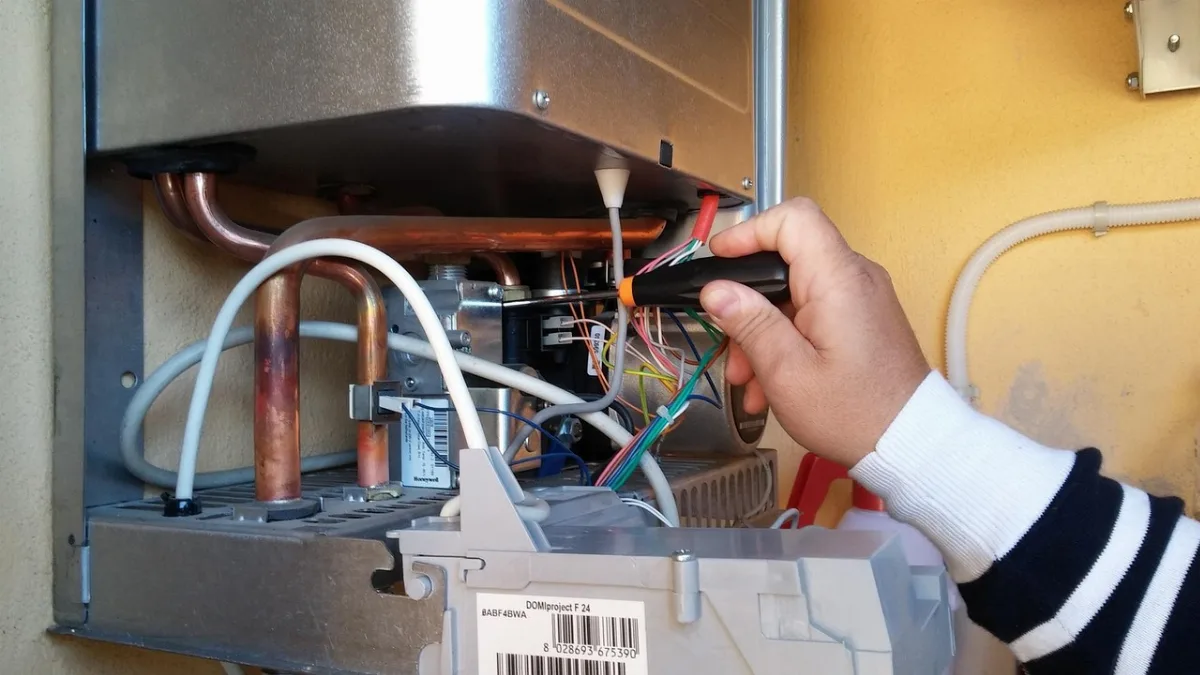
A good technician will test the thermostat, inspect the element for scale, and confirm the pressure valve vents freely. It is also a fine moment to run through a wider geyser safety checklist so nothing else is quietly overdue.
Preventing Overheating Before It Starts
Overheating is one of the most preventable geyser faults. A few habits keep the tank in its safe range for years.
- Keep the thermostat at a sensible 55°C to 60°C rather than the maximum.
- Descale the element every year or two, sooner in very hard water.
- Check that the pressure release valve is not painted over, blocked, or seized.
- Make sure the tank is properly earthed and the circuit has a working RCCB, so a wiring fault also trips out safely. Sound geyser earthing is part of the same safety picture.
- Never bypass or tape over a thermal cutout that keeps tripping; that trip is protecting you.
India’s safety norms behind these devices sit with the Bureau of Indian Standards, which is why an ISI-marked geyser with a proper cutout is worth insisting on.
Frequently Asked Questions
Why is my geyser water suddenly too hot?
The usual reason is a thermostat that has stuck closed, so the element keeps heating past its set point. Heavy scale on the element can also trap heat and fool the sensor. Switch the geyser off at the MCB, open a hot tap to release pressure, and have a technician test the thermostat before using it again.
Is an overheating geyser dangerous?
Yes. Scalding water can cause serious burns in seconds, and if the thermostat and pressure valve both fail, steam and pressure build inside a sealed tank. Hissing, knocking, or a bulging tank are urgent warning signs. Cut the power, keep everyone clear, and call a professional rather than opening anything yourself.
What temperature should I set my geyser to?
Around 55°C to 60°C suits most Indian homes. It gives plenty of hot water once mixed with cold, slows scale build-up, and cuts the electricity bill compared with the maximum setting. Households with young children or elderly members may prefer a touch lower to reduce the risk of accidental scalding at the tap.
Can hard water make a geyser overheat?
It can. In hard-water areas, calcium forms a thick crust on the heating element that traps heat against it and can mislead the thermostat, so the water runs hotter than the dial shows. Descaling the element every year or two clears the crust and keeps the temperature reading honest and safe.
Why does my geyser keep tripping the cutout?
A thermal cutout trips when the tank gets hotter than it should, usually because the thermostat has failed and let the element overheat. Repeated trips are a clear sign the thermostat needs replacing. Do not bypass or tape over the cutout; it is the last line of protection stopping the water from reaching boiling point.
Keep the Heat Where It Belongs
An overheating geyser is telling you something has failed, and the fix is almost always a simple thermostat or a good descale rather than a whole new unit. Catch the signs early, cut the power, and let a professional confirm the parts before you trust it again.
Sensible temperature settings and a yearly check keep the risk close to zero. For the full picture, read our water heater safety guide, or browse all our safety guides to keep every bath in the house a safe one.