Key Takeaways
- No hot water at all usually points to the element; wrong-temperature water usually points to the thermostat.
- Water that is scalding hot or never switches off is a classic sign of a stuck thermostat.
- A geyser that trips the ELCB most often has a failed, leaking element, not a thermostat fault.
- Both parts are affordable and replaceable, but testing them safely means working with live mains.
- Confirm the diagnosis before buying a part; swapping the wrong one wastes money and time.
“The element has gone, madam, ₹800 for a new one.” I’ve lost count of how many times a customer has repeated that line to me, only for me to open the geyser and find a perfectly good element and a dead thermostat. These two parts fail in very different ways, yet they get confused constantly, and the wrong guess means paying for a part you didn’t need. After years of diagnosing geysers on the spot, I can usually tell which one is at fault from the symptoms alone. By the end of this guide, so will you, and you’ll know when the job is safely a professional’s. It pairs well with our complete water heater repair guide.
What Each Part Actually Does
To diagnose the fault, you first need to know each part’s job. They work as a pair, and their symptoms follow directly from what they do.
- The heating element is the metal rod that heats the water. Pass current through it and it glows hot, warming the tank. It’s the muscle.
- The thermostat is the brain. It senses water temperature and switches the element on and off to hold your set heat and prevent overheating.
So the logic is simple. If there’s no heat at all, suspect the muscle. If there’s heat but it’s the wrong amount, or it never stops, suspect the brain.

Signs the Heating Element Is Faulty
A failed element is the more common of the two in Indian homes, mainly because hard water scales it heavily and burns it out early. Look for these signs.
- No hot water at all, even though the geyser has power and the indicator lamp glows.
- Water heats very slowly, a partly-failed or heavily scaled element struggling to transfer heat.
- The geyser trips the MCB or ELCB, often because a cracked element is leaking current to earth through the water.
- The tank runs but never gets properly warm, hinting the element is only partly working.
That tripping symptom is the important one. A leaking element is a genuine shock hazard, which is exactly why the ELCB cuts the power. If yours trips, stop using it.
Warning: If your geyser trips the ELCB or you feel any tingle on a tap or the body, switch it off at the MCB and stop using it. This points to current leaking to earth, usually a failing element. Do not keep resetting the breaker; call a licensed electrician.
Signs the Thermostat Is Faulty
A thermostat fault is sneakier. The geyser often still heats, so people rarely suspect it. The tell-tale is that the temperature is wrong or uncontrolled.
- Water is dangerously hot, or the geyser never switches off, the thermostat has stuck closed and isn’t cutting the element.
- Water is only lukewarm despite a high setting, the thermostat may be cutting off too early (though scale can also cause this).
- The safety cut-out keeps tripping, because a stuck thermostat lets the water overheat until the backup cut-out steps in.
- Temperature swings wildly between uses, pointing to an erratic sensor.
The scalding-water-that-won’t-switch-off symptom is the clearest thermostat signature. It’s also a safety issue, so don’t leave it running.
Element vs Thermostat: Symptom Comparison
Here’s the quick reference I keep in my head, laid out so you can match your symptom to the likely culprit before anyone opens the unit.
| Symptom | Likely element fault | Likely thermostat fault |
|---|---|---|
| No hot water at all | Yes, prime suspect | Possible, if stuck open |
| Water scalding / won’t cut off | No | Yes, classic sign |
| Only lukewarm water | Possible (scale) | Possible (early cut-off) |
| Trips the ELCB / MCB | Yes, common cause | Rare |
| Very slow heating | Yes (scaled element) | No |
| Wildly swinging temperature | No | Yes |
The Overlap Case: Lukewarm Water
You’ll notice one symptom sits in both columns: lukewarm water. This is the case that trips people up. Water that heats but never gets truly hot can be a low or failing thermostat, or a scaled element that can’t transfer enough heat.
In hard-water homes, my money is usually on scale first. Before condemning either part, check the thermostat setting and consider whether the geyser is overdue a descale. Often the “fault” is simply a blanket of scale on the element, and no new part is needed at all.
How a Technician Confirms It (Safely)
Symptoms narrow it down, but a proper test confirms it. This is where I always stress caution: these checks involve live mains inside a metal, water-filled appliance. Here’s the order a professional follows, so you understand what should happen, not so you attempt it on live wiring yourself.
- Switch off the geyser at the MCB and confirm it’s truly dead before opening the cover.
- Inspect the terminals for burn marks, melted insulation or loose connections, a common overlooked cause.
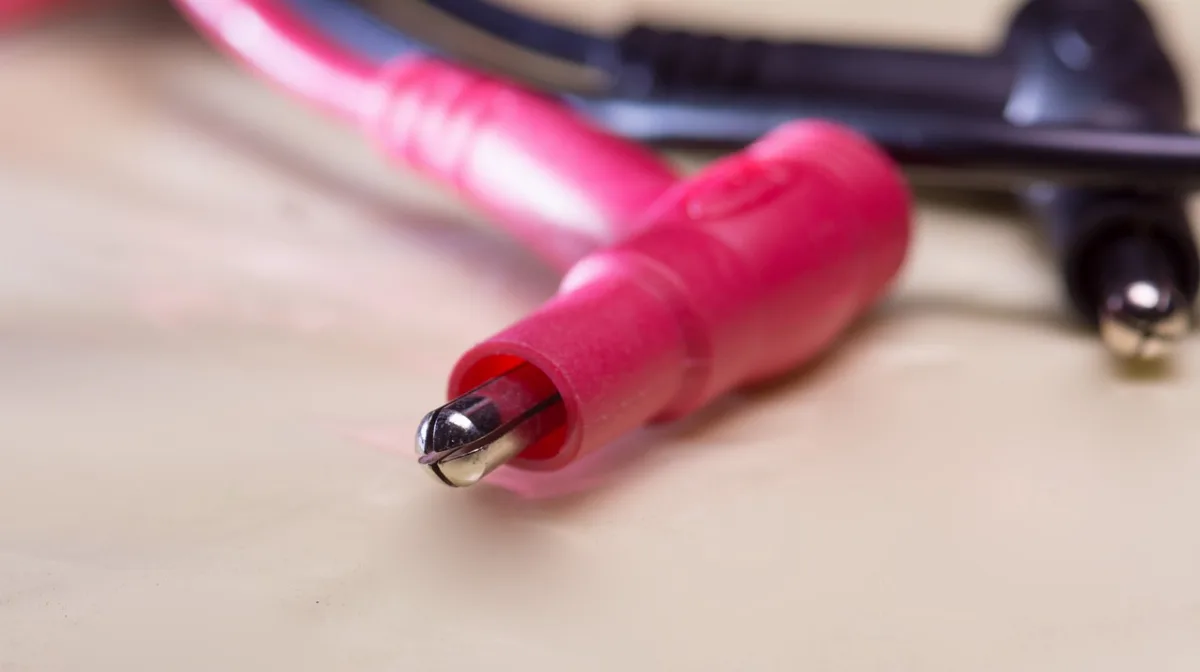
- Use a multimeter to check the element for continuity; an open circuit means the element has failed.
- Check the element for continuity to the body; if it shows, the element is leaking to earth and must be replaced.
- Test the thermostat’s switching action to see whether it opens and closes as the temperature changes.
Tip: When one part fails, it’s often worth replacing both the element and thermostat together on an older geyser, especially in hard water. The labour and downtime are the same, the parts are inexpensive, and you avoid a second call-out a few weeks later when the other tired part gives up.
What Each Repair Roughly Involves
Both are affordable, replaceable parts, which is good news, it means most of these faults don’t call for a new geyser. Here’s what to expect.
- Thermostat replacement: the cheaper and quicker of the two. The part itself is modest and it usually doesn’t require draining the tank.
- Element replacement: costs a little more and the tank must be drained first, so it takes longer. It’s still a routine job for a technician.
Fitted charges vary by city and brand, so treat any figure as a rough guide, but both are firmly in “repair, don’t replace” territory for a sound geyser. If you’re weighing a bigger picture, our guide on whether to repair or replace your water heater puts these costs in context. And if noise is part of your problem, our rundown of geyser noises and what they mean helps separate a scale issue from a part fault.

Frequently Asked Questions
How do I know if it’s the thermostat or element in my geyser?
Go by the symptom. No hot water at all, or tripping the ELCB, usually means a failed element. Water that’s scalding hot, never switches off, or swings wildly in temperature usually means a stuck or faulty thermostat. Lukewarm water can be either, and is often just scale. A multimeter test confirms it.
Can a bad thermostat cause no hot water?
Yes, though it’s less common than an element failure. If the thermostat sticks in the open position it never lets current reach the element, so the water stays cold even though the geyser has power. A technician can quickly tell this apart from a burnt-out element using a continuity test.
Why is my geyser water too hot?
Overheated water almost always means the thermostat has failed closed and isn’t cutting the element off at the set temperature. It’s a safety concern, since scalding water can burn. Switch the geyser off at the MCB and have the thermostat replaced before using it again; don’t just turn the dial down.
Does a faulty element trip the MCB?
Often, yes. When a heating element cracks, water can reach the live conductor inside and leak current to earth. The ELCB or MCB detects this and trips to protect you from shock. Repeatedly resetting it is dangerous. This symptom points strongly to the element rather than the thermostat.
Can I replace a geyser thermostat or element myself?
It’s technically possible, but it involves live mains inside a water-filled metal appliance, and the earthing must be perfect afterwards. For most homeowners it isn’t worth the risk. Given how affordable both parts and the labour are, having a licensed electrician do it is the safer, sensible choice.
The Takeaway
Diagnosing a geyser is less mysterious than it seems. No heat or tripping points to the element; wrong or uncontrolled temperature points to the thermostat; lukewarm water is usually just scale. Match the symptom first, confirm with a proper test, and you’ll buy the right part the first time.
Want to work through the whole fault-finding process? Browse our geyser repair guides or start with the full water heater repair walkthrough. For neutral background on how these appliances heat water, the Wikipedia water heating article is a solid read.